


To break China’s strategic grip on critical minerals, the US must remove impediments, streamline issuance of permits and marshal capital to mine resources from the sea floor, witnesses told Congress on Tuesday.
The hearing by a House Committee on Natural Resources subcommittee comes as US President Donald Trump – known for his “drill, baby, drill” mantra – promotes the harvesting of oil and minerals with minimal regard for environmental or foreign policy costs.
“The Trump administration have worked tirelessly to unleash America’s natural resources and restore our nation’s energy and mineral dollars,” said Representative Paul Gosar, the Arizona Republican who heads the energy and mineral resources subcommittee, adding that “nothing pleases our foreign adversaries, like China”, more than slow US progress.
Do you have questions about the biggest topics and trends from around the world? Get the answers with SCMP Knowledge, our new platform of curated content with explainers, FAQs, analyses and infographics brought to you by our award-winning team.
Since returning to the White House 100 days ago, Trump, a supporter of extractive industries, has tried to pressure Ukraine to pay for US military aid by handing over up to US$500 billion in rare earth minerals; teased a takeover of Greenland driven in part by its prodigious reserves of zinc, lead, gold, rare earth elements, copper and oil; and signed an executive order making it easier for companies to mine the deep sea floor.
In 2020 during his first term, he signed an executive order encouraging exploitation of moon and asteroid minerals.
Deep-sea minerals have become increasingly sought after as China has dominated the critical-minerals sector for profit and geopolitical benefit.
Beijing now wields control over an estimated 60 per cent of global production, 90 per cent of processing and 75 per cent of manufacturing in the sector. Many minerals are contained in potato-sized nodules on the seabed beyond the legal jurisdiction of individual countries.
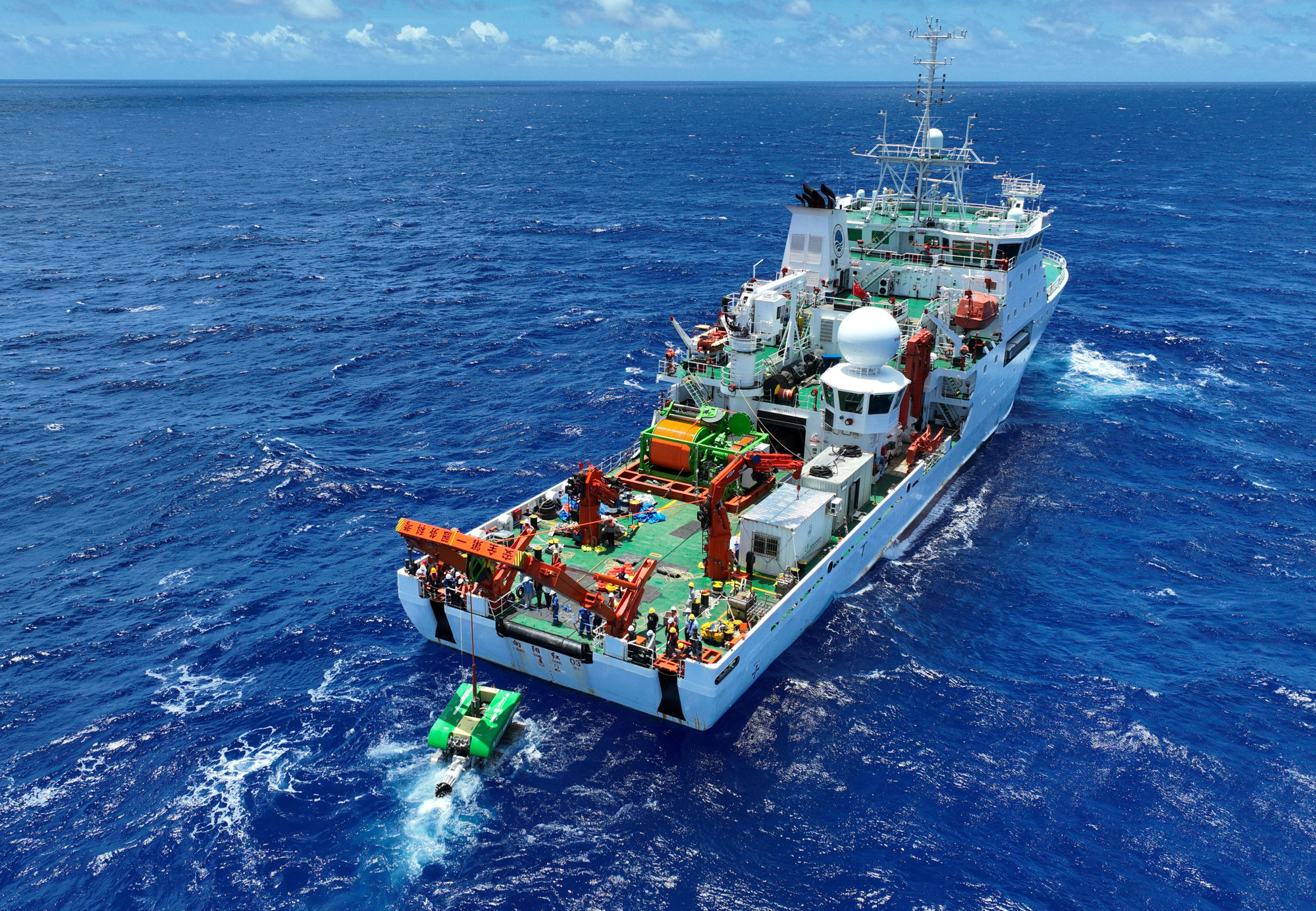
Mining executives praised Trump on Tuesday, urging the US to lead the competitive charge against Beijing and touted the jobs and economic benefits they said would result.
“This industry is at an inflection point where America can take the lead,” said Gerard Barron, chief executive of the Canadian firm the Metals Company and its US subsidiary.
“With its dominance in land-based processing, it’s clear why deep sea mining is one of China’s core resource strategies.”
In promoting deep-sea mining, the Trump administration has brushed aside efforts to cooperate globally, safeguard the environment and ensure equitable exploitation. The International Seabed Authority, established under the 1982 UN Convention on the Law of the Sea, has sought to develop rules for future deep-sea mining but the US is one of the few nations that has never joined the group.
This approach risks flouting international law and isolating the US, the Rand Corporation said in a report Tuesday.
“This might also encourage other nations, including China, to go it alone and conduct seabed mining on the high seas,” the research group said. “The geopolitical consequences of this could be disastrous, increasing contestation and the possibility of conflict.”
Scientists and Democrats on the subcommittee also pushed back during the hearing, arguing that the technology required to operate at depths of 13,000 feet or more is unproven, uneconomical and environmentally destructive.
“We do not need to bulldoze the bottom of the ocean to power our clean energy future,” said Representative Maxine Dexter, Democrat of Oregon, declaring Trump’s executive order as undemocratic and a sop to vested interests.
“The economic argument is a mirage. The financial risk is immense, and the consequences to ecosystems, to fisheries, to indigenous communities and to our local climate are too great to ignore.”
But supporters say the haul could be substantial.
The US Geological Survey has estimated that one swathe of the eastern Pacific Ocean between Hawaii and Mexico, known as the Clarion Clipperton Zone, alone contains 6,000 times more nickel, cobalt and manganese than all land-based reserves combined. And that area is less than 3 per cent of the Pacific.
Critics at the hearing Tuesday countered that it would take years, even decades, to realise these projects. Meanwhile, recycling is advancing and innovation and new battery technologies are sharply reducing demand for many minerals, including nickel, cobalt, copper and manganese.
For example, Tesla, the electric vehicle manufacturer controlled by Trump supporter and adviser Elon Musk, has reduced the amount of nickel and cobalt in its EVs by half in recent years.
“It is subsidised plunder,” Representative Jared Huffman, a California Democrat, said. “Instead of pursuing this reckless fantasy, we should be scaling up on solutions we know are effective – battery, innovation, recycling, infrastructure, product redesign, building a true circular economy that keeps materials in use and ecosystems intact.”
Over the past decade, China has tightened its grip over strategic mineral supply chains vital for technologies from fighter jets and electric vehicles to mobile phones and smart appliances. Its commanding hold over processing follows decades during which Western countries were happy to see China assume that dirty, environmentally destructive work.
China has used its dominance to pressure other countries. In 2010, it briefly suspended rare earth exports to Japan over a territorial dispute. This month, it halted exports of six rare earth minerals to the US as the trade war intensified.
“Now is the time to reform permitting processes to unleash crucial terrestrial mining projects and embolden seabed mining operations,” the subcommittee said, and “counter long-standing foreign influence, particularly by China”.
More from South China Morning Post:
- China-born scientist Jian-Ping Wang forged a rare-earth-free magnet. Will it help the West?
- Tesla’s Optimus humanoid robot hit by China’s rare earth export controls
- Myanmar earthquake may have disrupted China’s rare earth supplies, analysts say
- China’s rare earth dominance could crumble in 10 years, CAS study forecasts
For the latest news from the South China Morning Post download our mobile app. Copyright 2025.


