Chinese and US officials are discussing whether business leaders will join President Xi Jinping’s delegation to the United States next month, as the two sides prepare to extend a one-year trade agreement reached in Busan last October, according to people familiar with the talks.
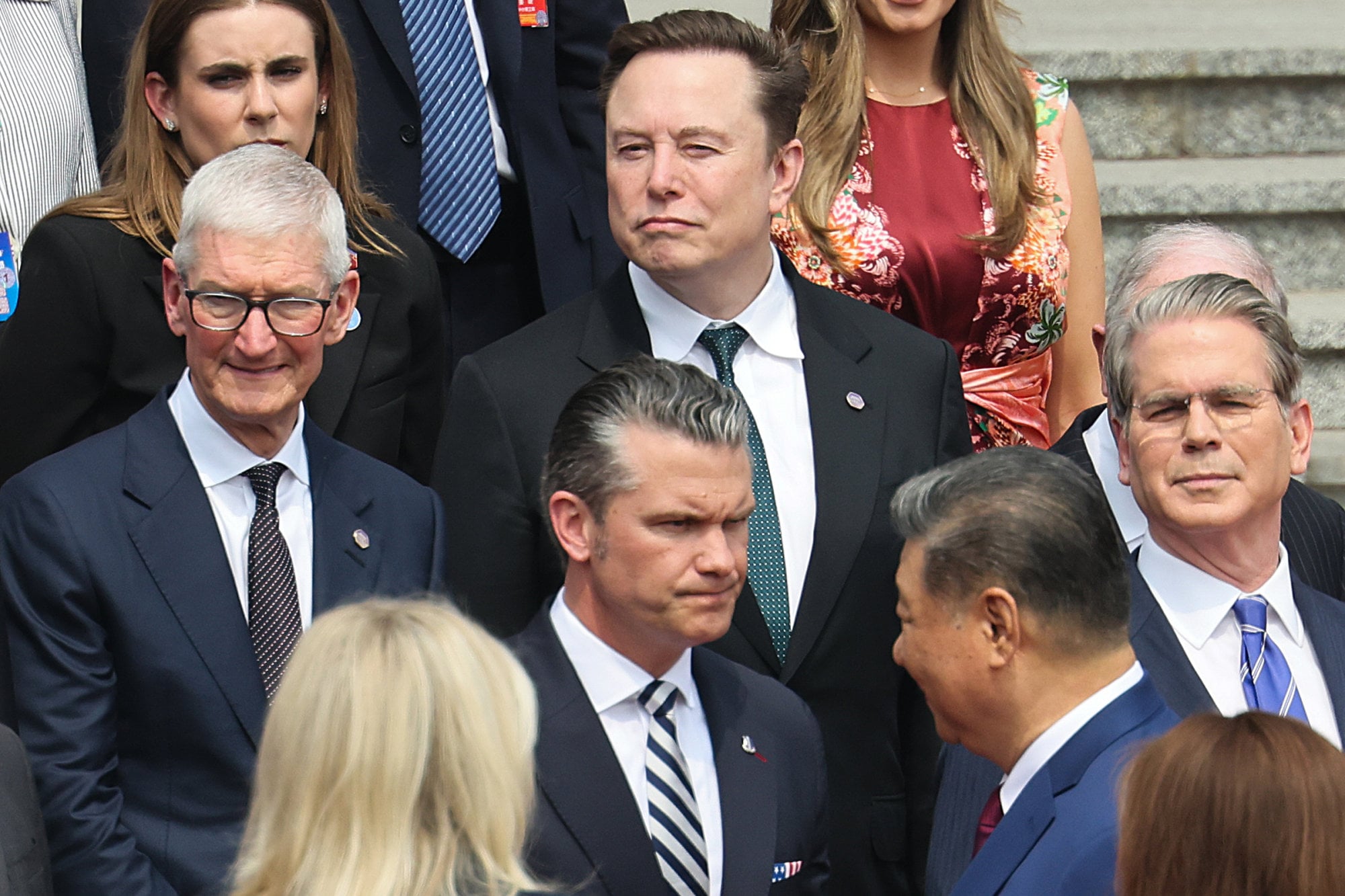
The negotiations come as Xi is expected to meet US President Donald Trump in Washington on September 24. Trump travelled to Beijing in May with a large group of top American CEOs, including the heads of Tesla, Apple, Nvidia and Boeing.
In a meeting with US ambassador to China David Perdue in Beijing on Wednesday, Foreign Minister Wang Yi called for both sides to implement the leaders’ consensus, manage differences and remove obstacles to high-level exchanges, so ties could become “stable, healthy and sustainable”.
Perdue said Trump and Xi had provided “important strategic guidance” and described Trump’s May visit to China as “very successful”. Washington was ready to strengthen communication, advance cooperation and prepare for “important high-level interactions in the next phase”, he said, calling for a constructive and stable relationship based on “respect and reciprocity”.
Trump’s envoy later wrote on social media that the meeting was part of preparations for Xi’s visit.
Against that backdrop, four people with knowledge of the discussions said the inclusion of Chinese business leaders was being negotiated, with the idea framed around reciprocity after the US executives joined Trump in May. Accounts differed as to which side was driving the request, and a final decision had yet to be reached.
Two sources said Beijing was eager to bring business leaders, noting that many Chinese companies remained interested in investing in the US.
One of the sources said the discussion pointed to China’s interest in accelerating talks on the stalled Board of Investment, one of the key announcements from the May summit.
Another source said Chinese companies covered by the Board of Trade agreement could be part of the delegation, as the pact directly related to their business interests.
The Board of Trade was another important outcome from the summit in Beijing, and efforts to get it up and running are in the final stages, focusing on identifying non-sensitive sectors and products eligible for tariff-reduced trade capped at US$30 billion for each side.
Another person close to the talks said a delegation could potentially help with a shift from confrontation towards managed economic competition and allow Chinese and US business leaders the space to build ties alongside the political summit.
A separate source, however, said the delegation was requested by Washington.
The business delegation and trade talks are unfolding in parallel, with both sides looking for concrete outcomes from the September summit as they manage broader trade and investment ties.
There is a broad understanding that the trade truce agreed in Busan, South Korea in October 2025 will be extended, according to sources.
The two sides at the time agreed to reduce some US tariffs on Chinese goods, suspend additional US restrictions on Chinese-affiliated companies, pause certain Chinese rare earth export controls for a year, and secure Chinese commitments on American soybeans and fentanyl precursors.
Sources said an extension of the Busan trade deal was likely or “almost certain” as both sides wanted it despite recent retaliatory measures and actions by the US Federal Communications Commission, but they disagreed over its duration.
Beijing preferred an extension that ran through the end of Trump’s presidency while Washington was seeking another one-year deal, one source said.
The source added that Beijing, in negotiating a longer extension of the trade pact, sought stability and wanted to “lock in” what it viewed as a favourable agreement.
Another person familiar with the talks said the Trump administration was “playing coy” over the duration of the extension to create an impression of leverage.
Given the current state of the discussion, the agreement is set to be extended for one year, according to another source.
One source said US concerns over rare earth supply flows could be addressed through dialogue and that the Busan deal was not expected to be given prominence during the Xi-Trump talks.
Low-level tit-for-tat measures involving export controls and targeted actions against companies are likely to continue; however, concerns about miscalculation remain.
The Federal Communications Commission last month banned the import and sale of new foreign-made robotic devices and power inverters, sectors in which China is a global leader. Washington also added over 40 Chinese companies to its Uygur Forced Labour Prevention Act entity list the same month. Beijing retaliated by tightening export controls on drones and sanctioning seven American firms.
Another person said the agreement could be extended quietly or folded into a broader economic understanding, allowing both sides to preserve the existing trade framework without making it the centrepiece of the Xi-Trump meeting.
But Washington, according to another source familiar with the discussions, was not seeking any major breakthrough when the two leaders meet next month.
Sources also indicated that the impending US tariffs on excess industrial capacity against 16 economies, including China, were unlikely to adversely affect Xi’s visit.
Washington has conveyed to Beijing that the additional tariffs imposed under Section 301 of the 1974 Trade Act are simply replacing the import levies that the US Supreme Court struck down in February.
Last month, the Trump administration imposed tariffs of 10 to 12.5 per cent on goods from 60 economies under its forced labour probe, with China facing the 12.5 per cent rate. Beijing opposed the move but did not retaliate.
Both sides are actively attempting to insulate the September meeting from the near-regular actions spanning multiple sectors, seeking to prevent existing and new disputes from derailing broader efforts to stabilise bilateral ties ahead of the summit. -- SOUTH CHINA MORNING POST