PHNOM PENH: The Extraordinary Chambers in the Courts of Cambodia (ECCC) is teaching tour guides about the Khmer Rouge period, to increase their understanding of Cambodia’s dark regime, transitional justice and the legacy of the ECCC.
In collaboration with the Tuol Sleng Genocide Museum, the “Transitional Justice: The Legacy of the Extraordinary Chambers in the Courts of Cambodia and Cambodia’s Memorial Sites” workshop was held on August 28, for 45 guides, according to an ECCC press release.
The workshop aimed to enhance their knowledge and skill at interpreting Cambodia’s history and the ECCC’s judicial proceedings with integrity, responsibility and an evidence-based approach.
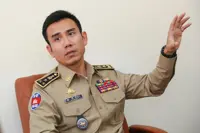
“Strengthening the capacity of Cambodian tour guides was essential to ensuring that historical knowledge and the legacy of justice are accurately communicated to both national and international visitors,” explained Hem Kranh Tony, secretary of state at the Office of the Council of Ministers and acting director of administration at the ECCC.
He described the workshop as vital in preserving historical truth, honouring victims and ensuring that the lessons of Cambodia’s past are not forgotten or distorted by future generations.
Participants examined the historical context and impact of the Khmer Rouge regime, the ECCC’s mandate and cases, victim participation, the reparations framework, the implementation of the ECCC’s residual functions and efforts to preserve the court’s legacy, visiting relevant halls related to residual functions.
Prak Sonnara, secretary of state at the Ministry of Culture and Fine Arts, who attended the workshop opening, described the workshop as an important platform for sharing knowledge about transitional justice, the ECCC’s legacy and the role of Cambodia’s memorial sites in advancing peace education and global citizenship.
He believed the gathering provided an opportunity to delve into accurate and responsible interpretation and communication of history, within Cambodia’s social context.
The attendees received detailed information about the Tuol Sleng Genocide Museum and examined evidence relating to the former S-21 Security Centre, the Choeung Ek Genocide Centre and the former M-13 Security Centre.
The training was supported by GIZ-CPS and held at the ECCC Resource Centre and the Tuol Sleng Genocide Museum. - The Phnom Penh Post/ANN